Thursday, 5 November 2015

PRO FORMA

Precis

My narrative is about dementia and the symptoms, it is an awareness campaign to help family and carers of dementia sufferers to stop and help with the symptoms of the disease. It will start off with the letter D be followed by each letter of the word dementia which will be representing a symptoms or behaviours. Each letter has a symptom related to dementia the narrator which is myself reveals tips and knowledge on each  symptom so that families will feel at ease if one of their relatives have dementia.

Rationale
This body of work is about dementia, this disease will affect 850,000 people by the end of 2015 it is very hot topic at this moment in time as there is a lot of reports in the media on funding and research so there is a lot of information out there to use to my advantage to create my narrative.
I wanted to create an awareness campaign to show and inform the carers on the disease. But I don’t want it to be a sad and dark campaign because if this is for real life brief for the television or YouTube a dark and sad campaign wouldn’t help the carers it could make them feel worse about the future of dementia suffer and not reassured.
The campaign will show the symptoms of the illness but will be delivered in an upbeat friendly way by myself as the narrator. Each Letter and symptoms are short and concise pieces of information that are enough knowledge for the audience to gain valuable tips and information from but are not too long that they forget vital information that could benefit them. The key part of my campaign is to make sure even though the information is concise it is clearly spoken. Therefore the dialogue needs to be spoken slowly as if the information is spoken too fast the information will not be delivered correctly.
After each letter is in the font of Helvetica ultra-light this font shows the word clearly but is not too harsh as other fonts which could take way from the overall look. Each letter relieved I wanted figures to show how many people in the uk had dementia at the start of this narrative project but the statistics are quite daunting so could do the opposite of what my campaign is supposed to do which is inform people about this disease but in a happier more light hearted way so that dementia is not seen as an devastating disease that takes people’s loved ones away. Obviously the disease will not be any less destressing with my campaign, but having the right information delivered in an approachable friendly way will surely help carers and families of dementia sufferers as they will be prepared for what is to come.
Along with the text and voice over there is images that are visual aids that relate to the letter or the information being narrated by myself, Some letters have a few images that relate to what is been said and some only have one image as I didn’t want pointless images in the campaign if they didn’t show anything extra that wasn’t already there. The visual aids don’t all have a direct link to the information being given but visually show the word for example nurturing is a plant being watered this is anything to dementia directly but visually to show nurturing it works as one nurtures a plant like a carer would nurture a dementia sufferer. The fades in my campaign are about 3 seconds long this because they slowly fade into the next image representing the dementia sufferers mind slowly fading away. This is not obvious to anyone who is watching it but I include this technique to relate to the subject matter any other transition wouldn’t have been appropriate.
The choice of where my campaign would be seen has been tricky for me to think about I have been wondering where it should be shown. The television would give me a greater audience to show my campaign to so there is a better chance that my campaign will help carers and families of dementia sufferers. But I don’t think my campaign would look right on television as I think it doesn’t have the right look for a big television advert as it hasn’t got the typical advert style as I don’t have any moving images in the campaign whereas majority of adverts are moving images. Therefore I think you tube is the place I want my campaign to be seen because I would want it linked to the Alzheimer’s Society website to help carers  and families feel more at ease when someone they loved has been diagnosed. Also this website will have the right audience for my campaign whereas the television is a much wider audience.

Overview
What support do you require?
Equipment considerations –tripod, lighting will need to be warm and friendly set with in a regular home so that the audience can relate to the images been shown.
Travel/transport considerations??
Budget low using my home or studio to create the scene

Objectives
·        To create an awareness campaign on dementia
·        To  make sure my personal emotions don’t get in the way of the piece
·        Add a touch of humour to lighten the mood
·        Clear and concise points spoken clearly and slowly 
·        Clear text that is not harsh but inviting
My image is aimed at adults as the scene would be more relatable to that audience then a younger audience. However this is an awareness campaign so anyone could see it as I would want to be shown on you tube as I think it would fit in well on YouTube that could be linked to the Alzheimer’s society website for advice for carers 

Synopsis
1.      Each letter of the word of the disease is linked to a symptom or side effect it would look like this
D is for debilitating
E is for eating
M is for memory
E is for exercise
N is for nurturing
T is for tiredness
I is for illness
A is for agitated
2.      With each letter advice about each symptom for example E is for eating dementia sufferer have a problem with eating sometimes they can’t be bothered to eat or they overeat. Some tips is to make food more inviting. As well as information there is images to show visually what is going on.

3.       After each letter is relieved the full word will appear with a faded image of lots of old photos as dementia sufferers can remember the distance more clearly than the recent past. Also it ties into my strap line of my campaign “remembering the person for who they were and not who they have become.”


BIBLIOGRAPHY 
          
         MY BLOG LINK : http://areasofphotopractice.blogspot.co.uk/


  • https://sites.google.com/site/bookmarkedbypmosborne/writing-information/plot-lines
  • www.slideshare.net
  • www.queerculturalcenter.org/Pages/Weingberg.htm
  • www.phaidon.com/agenda/.../gregory-crewdson-laid-bare-in-new-film/
  • www.tomhunter.org/info/
  • www.tate.org.uk/art/artworks/millais-ophelia-n01506
  • https://www.alzheimers.org.uk/statistics
  • http://www.alzheimers.org.uk/site/scripts/documents
  • pixgood.com
  • http://www.jonathanstead.com/fragilemind.html
  • http://www.uptodate.com/contents/dementia-including-alzheimer-disease-beyond-the-basics?source=outline_link&view=text&anchor=H30#H30
  • http://www.mirror.co.uk/news/uk-news/most-and-least-attractive-accents-6270249
  • https://www.youtube.com/watch?v=fAAeWBRztbc
  • https://www.youtube.com/watch?v=rUtzIcfyDuY

DEMENTIA FINAL VIDEO


This is my final awareness campaign Overall my final video awareness campaign is a success. I feel that delivers everything I think an awareness campaign should. It has clear and concise information telling the audience what each symptom is and what the effect on the dementia sufferers each symptom has but in an informative but bubbly manner to not scare away the audience and worry them about what the future holds. The strap line remembering the person for who they were and not who they have become.” is the last words spoken to stick in people’s mind and make them feel at ease and not worried. The last image is website details for the Alzheimer’s society as I would ultimately like this campaign video linked to this organisation as it is leading dementia charity in the UK possibly during dementia awareness in May. If I could change anything I would maybe have a different voice possibly a southern Irish voice as this is voted the most liked voice in the UK according to YOUGOV. Due to time constraints this wasn't possible. Also i would change the front image that you tube choose for me as it doesn't necessarily relate to Dementia.  

Dementia video Revised


Changes to be made to my video 


one of the changes i could do is to change the voice i need to find out what voice people would want to listen to.


It's bad news for Brummies after the Birmingham accent was voted the least attractive in the British Isles - while southern Irish tones are seen as the most appealing.
The Welsh accent comes third in the list, below Received Pronunciation (or BBC English).
YouGov asked British adults to say whether they think each of the 12 "main accents" of the British Isles are attractive or unattractive.
Southern Irish, Welsh and the Yorkshire accents all did well, but Brummie, Scouse and Mancunian did badly.
This YouGov report says a southern Irish voice is the most liked accent i don't if I can find a southern Irish voice for this video in these time constraints. 
After looking at this i recorded my voice my mum's voice and my grandmas voice and my tutor felt my voice was good enough so i have to make sure i practice my pronunciation and speed of delivery.

dementia video feedback


Dementia video feedback

After my first video was posted on here and on you tube i have received feedback from Lawrence and peers on how to improve it :

  • DIALOGUE
  • AUDIO QUALITY 
  • IMAGES 
  • SONG AT THE END 
  • THE FONT
  • THE FADING BETWEEN EACH SECTION 
  • FACTS TOO HARSH 
  • CHANGE THE N OF DEMENTIA FROM NURSING TO NURTURING 

  DIALOGUE - the dialogue is not clear and not entirely related to the individual letter. Also the dialogue was a bit depressing and not what i wanted which is to be happy and informative.

AUDIO QUALITY -the quality of the sound is not very crisp ans sharp it had background noise and clicks which are the start of the recording.


IMAGES- the images are rushed the quality is not up to standard also the last image showing agitated is complete different to the other so it doesn't appear cohesive.They don't all fit the frame , some are on too long and don't really say anything. also some images like the illness one where there is lots of pills on table appears depressing.

SONG AT THE END - the end song by Nickel back called Photograph even though it fits it is too harsh for the piece as it suddenly comes in at the end and doesn't really fit the target market which is the older generation.


THE FONT -times new Roman is a font that looks too harsh and stands out too much on the page also the letter on its own looks amateurish so the full word should be displayed 

THE FADING- the fading is too quick it should be slower to represent the mind of a dementia sufferer fading.

FACTS- the facts at the end are too harsh and come across as daunting and scary as they are statistics that also come across as cold. 

N LETTER - the N for nursing makes the audience feel bad and worried for the future as the dialogue states that one will have to become a nurse which could really worry carers watching this campaign


Friday, 30 October 2015

dementia video


this is my first video for my project is about dementia but it is light hearted and informative which i like. the flow of the video works as the dissolve transitions work because they are not too harsh and take the effect away from the video but they create a nice flow between each still image. the only thing i think that needs improving is the audio there is background noise and it does sound shaky. also i need a confident speech as sometimes i hesitate taking the overall effect away from the end product. the nickel back song at the end i feel works but i am worried it isn't age appropriate 

Questions for next video 


  •  Do i need an older song ? 


  • Do i need a need an older voice?
  • Do i need new images? 


Monday, 26 October 2015

My Narrative Revised


Jonathan Stead 


n 2008 Jonathan Stead's Grandmother was diagnosed with dementia and having lost her husband and increasingly unable to care for herself this project explores the last few months of her life. These unique singular glass plates serve as a physical lasting reminder of the last few months of her life. The flaws on each of the plates reflect the'errors' and flaws present in her mind as the disease took over. the effect of the glass plates also to me looks like old photos that his grandmother would have that what i saw when I first saw these image before i knew about the glass plate technique.


from the feedback session the idea of dementia narrative presents dark side to my piece of work which could be a problem as an awareness campaign it should have a happier note to the piece but i don't want the piece to be a joke i still want it to be informative and have a serious element lesson.


The images above in the film are very yellow and warm lighting which does wash out other colours in the shot. the positioning of the camera as well doesn't show that the food is getting easier it eat as the disease progresses so the idea of the narrative is not clear enough for the audience to see and realise what the sequence is about.The only give away is the voice over and interview otherwise it isn't clear.


my initial idea of showing the stages of dementia through eating food doesn't work as without an explanation or interview the audience would not know what is going on. 


I want to do a awareness campaign informing carer givers of dementia suffers to stop and help with the symptoms of the disease. It will start of with a charade style one word, 3 syllables and 8 letters. Then each letter of the word dementia will be shown representing a symptom. After each letter is relieved the voice over will reveal statistics about dementia and explain to carers that making memories now will help in the future to save more of the person they once knew.


Monday, 12 October 2015

My Narrative


Dementia Narrative

People with dementia often experience various problems with eating and drinking. Eating a healthy, balanced diet is important. It can help maintain physical and mental well-being. 

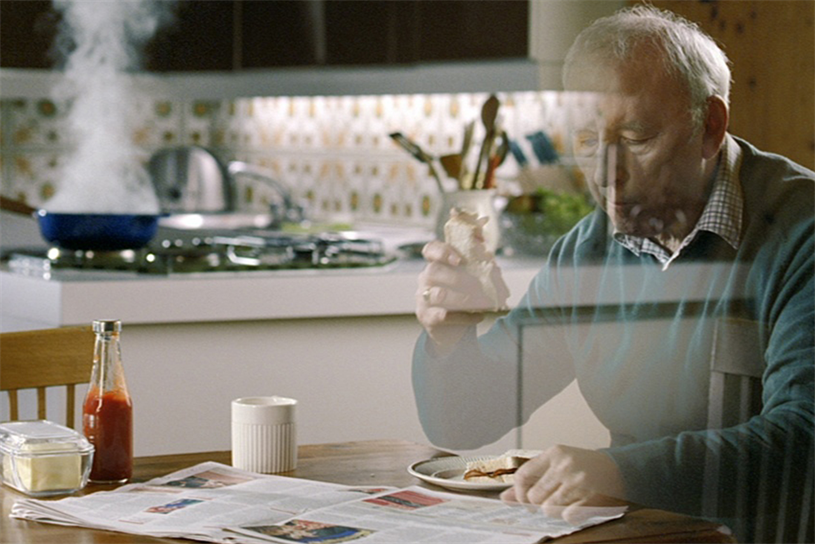
Looking at previous campaigns there is nothing on dementia suffers and their diet as I known from having relatives with this condition there eating habits change dramatically as the disease takes over. the appetite is suppressed or they over eat. but it is still important for them to get a balanced diet there are tips and ideas that carers can do to deal with this here are some examples 

Advice from the Alzheimers Society 
  • Regular snacks or small meals are better than set mealtimes.
  • Make food look and smell appealing. Use different tastes, colours and smells. The aroma of cooking can stimulate someone’s appetite.
  • Provide food the person likes. Try not to overload the plate with too much food; small and regular portions often work best.
  • Positive encouragement and gentle reminders to eat, and of what the food is, may help.
  • A relaxed, friendly atmosphere with some soft music may help.
On big problem with dementia suffers may have difficulties with chewing food. They may forget to chew or they may hold food in their mouth. Certain foods, such as sweetcorn or dry biscuits, may be more difficult for the person to chew or swallow. These should be avoided. If the person is experiencing pain in their mouth it will make chewing uncomfortable and difficult. As dementia progresses swallowing difficulties  become more common, although they can vary from person to person. If a person is having difficulty with swallowing, a referral to a speech and language therapist can help. Difficulties can include holding food in the mouth, continuous chewing, and leaving harder-to-chew foods (eg hard vegetables) on the plate. Weight loss, malnutrition and dehydration can also be consequences of swallowing difficulties.

This is the bases of my narrative the progression of dementia through food. As there is no other campaign like it there is a need for it to be highlighted. I want to show this through the carers perspective as they are watching someone they love  revert back to a child by their mannerisms and the way they can't remember simple task for example eating with a knife and fork. Seeing relatives change from the happy go lucky self to a child again more less is saddening to see for both sufferer and carer more so for the carer as the see the progression more so hence I want to show this point of view. The other main idea I had for my narrative is not to show the face of the sufferer or less of face as possible as if a person face is shown I believe the campaign would be too focused around their individual story and not the message of the campaign which is about dementia sufferers and their relationship with food.


Constructing a Narrative


Constructed Narrative 


  • Framing 
  • Constructing a scene 
  • Mise en scene 
  • Symbolism 
  • Time and place 

Framing 

especially in the photographic arts, is primarily concerned with the position and perspective of the viewer. The position of the observer has tremendous impact on their perception of the main subject, both in terms of aesthetics and in their interpretation of the meaning 
  • what are you framing ?
  • what you not framing ?
  • why you not framing ? 

Constructing a scene 

  • What is the frame?
  • Where is the scene taking place?
  • Why is this in the shot ?
  • why is this not in the scene?
Set Design

is the creation of scenery for television, film and stage this is not the same constructing a scene they are different!

Mise en Scene
 placing on the stage is the literal translation of mise en scene from French but the French term is used to mean director of a film which still has a reference to placing in the scene.

Symbolism 
the use of symbolism to transmit and control a scene 

example -The Graduate 

symbolism 

  • orders from the captain and orders from the airport reflects that ben the main character is constantly been ordered how to live his life. 
  • the travelator symbolises  Ben's journey and where he is heading.
  • the end of the titles shows Ben sat in front of a goldfish tank making it look like that he is goldfish looking out of bowl

Constructing a scene and the importance of time in relation to storytelling studio and non studio approaches.

Practitioners relating to my narrative

Jem Southam 

The subject of this body of work is oberserving the life cycle of nature and the decay of nature. this relates to my project as my idea is about how dementia changes a person. Even though decay is link to rotting it is also linked to death.Therefore dementia could be said to be a disease where the sufferers are decaying as the disease takes over more of them as person they are slowly decaying away like the wildlife in this series 


Sam Taylor-Wood

The still life body of work is a time lapse piece showing again decay and death but with fruit the images look like they are captured in motion even though they are a series of stills but there is a narrative there about decay.The same as the Jem Southam the decaying nature and fruit relates the decay of the mind in dementia sufferers. 


Wednesday, 7 October 2015

Narrative ideas


NARRATIVE IDEA 


When I was thinking about  ideas to create my narrative I had several ideas but they were all based around this idea of a dinning table , a couple and meal for two.

I was initially going to create a narrative on what appears to be a couple having a meal with two plate but in reality there is just one part of the couple eating and the other member of couple is no where to be seen. The narrative was looking at loneliness but after thinking abut this idea I thought I could take it further. I thought the loneliness narrative wasn't as strong but I like the setting of the dining table and the couple eating.Hence I wanted to change the narrative to dementia as i have family members who suffer from dementia I know about how they change especially doing simple tasks like eating. 


Dementia research 


  • By 2015 there will be 850,000 people with dementia in the UK.
  • There are 40,000 younger people with dementia in the UK.
  • There are 25,000 people with dementia from black and minority ethnic groups in the UK.
  • There will be 1 million people with dementia in the UK by 2025.
  • Two thirds of people with dementia are women.
  • One in six people aged 80 and over have dementia.
  • 60,000 deaths a year are directly attributable to dementia.


Alzheimer's Society Dementia Brain Video


Claire Marshall

claire marshall is makeup aritst turned blogger, her tumblr blog Left-side  features this post about claire and her relationship with her dementia suffering mother 


I WISH I COULD SPEAK TO MY MOM TODAY…


I know I don’t speak about this topic often, maybe I should. Maybe if I spoke about it more, those of us who are going through the same thing could share our experiences and I would feel less alone in these feelings. Honestly I don’t bring it up because it can be such a downer and if I allow myself to speak about it, or even think about it…I think that I will cry and that in itself will slow me down.
Let me first say that my Mom is alive. Maybe the title threw you off but let me explain. For those of you who may not know this about me, my Mom has always been my rock and the reason why I’ve come this far in my life. I owe her everything. She was always strong, independent, didn’t take shit from anyone and raised me to be the same way (which I’m forever thankful for). Next year I’ll be turning 30 and I’ve started to realize how much I am in fact, my mother’s daughter.
My Mom also happened to be diagnosed with dementia 2 years ago.
As her memories fade it becomes harder and harder to stay in touch. I know she encouraged me to pursue my dreams and move to Los Angeles despite the diagnosis, but I can’t help but feel a shadow of guilt every once in awhile. When I first moved I would try and fly back to Virginia every other month or so but it’s gotten harder to maintain those frequent visits. I don’t think I’ve physically seen my mom in 6 months because work has started to get in the way but she understood and said, “I don’t want to hold you back.”
Last February was the first time she didn’t remember my birthday and tomorrow (Thanksgiving) will be the first that I can’t make to be with her. I wish I could speak to her and have her understand what my current achievements are. I wish I could speak to her and tell her how she is truly my driving force. She is the reason why I don’t believe that failure is an option and I wish that I could tell her in a way that she would understand.
This is the time of year that people take the time to be thankful and surrounded by family. The harsh reality is that not everyone is able to enjoy such a luxury. My hope is that by reading this it will remind you to enjoy the time you have with your loved ones and keep those memories close to your hearts. You are so lucky to have them. 


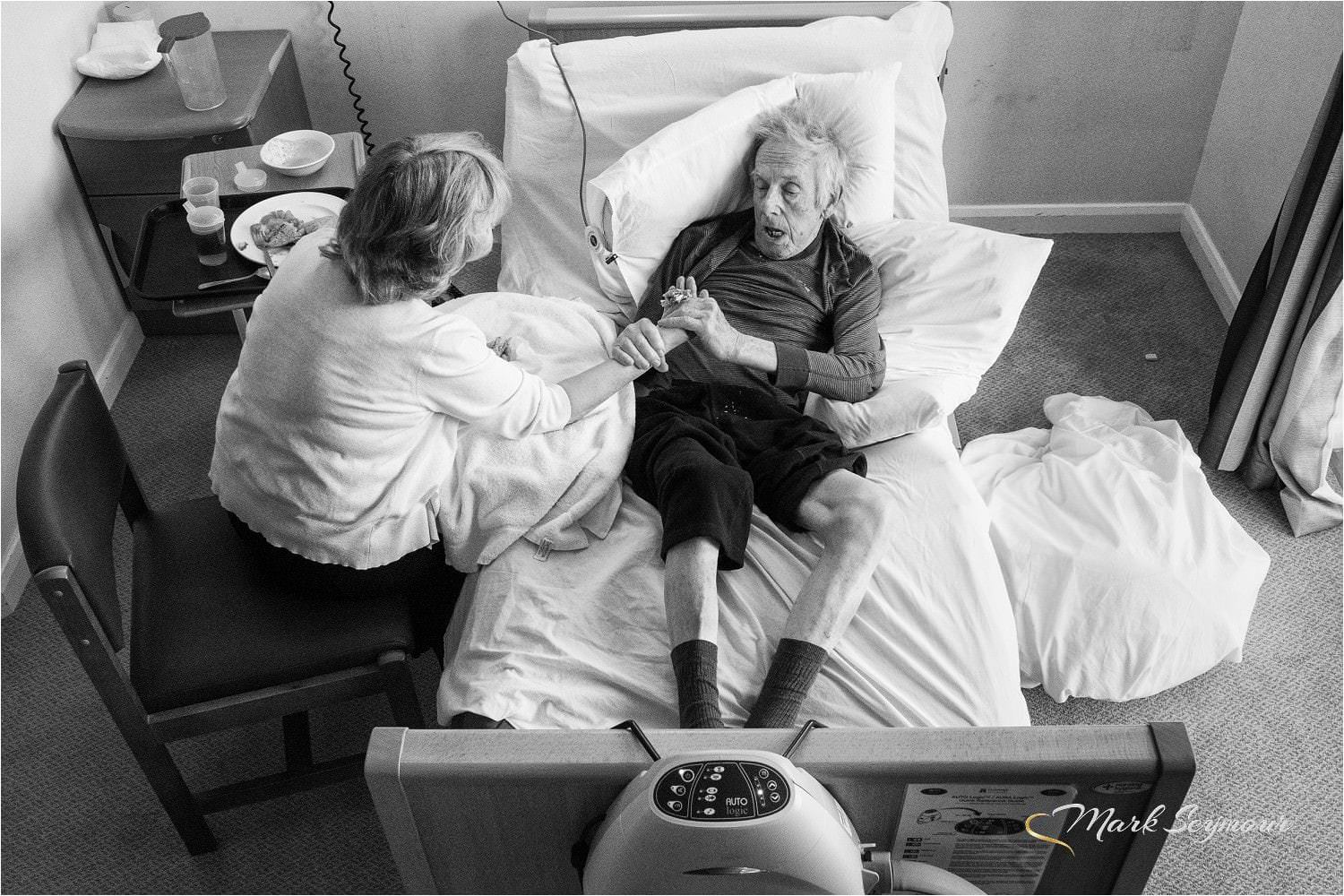
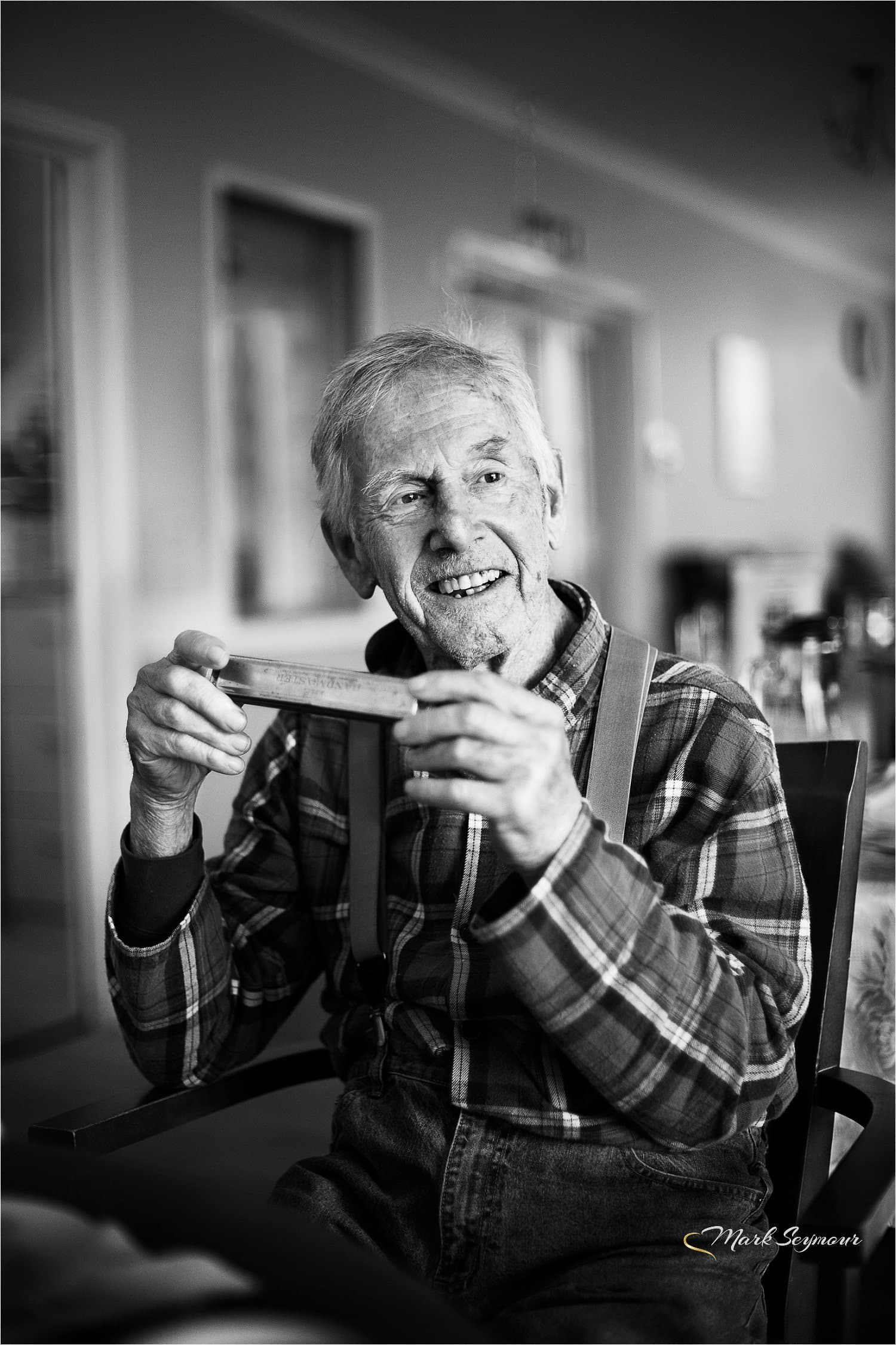
Living with dementia: A harmonica for Ronnie by Mark Seymour 


As a child Mark Seymour always had a camera in is hands and would be constantly take photos of his mum and dad. It wasn't usual that want to be a photographer and would take pictures of his mum and dad in their daily life. When Mark's dad Ronnie was diagnosed with dementia took upon his self to document his dad life in this difficult and painful time. Even though it was a hard documentation to do he felt compelled to do, bringing meaning not just to them as a family but so he could take something positive from this situation and use it to help raise the awareness of others of what dementia does to a person and their family.

Ronnie with picture of a Vincent Black Shadow


Ronnie at Home


Mum leaving dad at care home


Alzheimers

Ronnie with Harmonica


Marks pictures  of his Dad and the story there within produces a powerful connection with people touching their hearts, with so many people knowing a friend or family member with a similar story to tell. I want to raise awareness of dementia for the patient but also the impact on their families and loved ones.”

My Reflection on this work 


my initials thoughts on body of the work is that is quite emotional piece to look at as you can see how is dad has deteriorated due to this illness. The images even though not all are images of his dad they all relate and tell a story. I like the fact that the last image is of his dad in a happier time I believe Mark wanted remember his father as a happy go lucky soul not what he turned into due to this disease. the images being in black and white has more of an effect I think as there is no distracting colours to take away from the focus from the context of the image. These images do collectively tell the story of Mark's dad battle with Dementia.


Awareness campaigns

I am thinking about my narrative as an awareness campaign so i need to see what campaigns are out there at the moment looking at the style and the look of the campaigns .